Literacy
At West Hill School, reading isn’t just part of what we do — we believe it is a fundamental element of success. We believe every boy, no matter where he starts, can grow into a confident and capable reader who feels proud of his progress. By creating a vibrant culture of reading throughout school life, we aim to nurture young men who think independently, question thoughtfully and express their ideas with clarity and confidence. Through reading, we open doors, broaden horizons and lay the foundations for lifelong learning.
Reading is one of the most important foundations of academic success. Without strong reading skills, students’ opportunities to access learning across the curriculum can be significantly limited. Reading for pleasure plays a vital role in improving educational outcomes, helping students develop vocabulary, comprehension, confidence and curiosity. According to a study from UCL, students who read for pleasure made greater progress across all subjects, and the benefits of childhood reading were still in evidence through vocabulary and cognitive ability more than 30 years later. Therefore, a strong culture of reading in our school will help our students today and long into their future.
Our Intent
Our intent is to ensure:
- Every student becomes a fluent, confident reader who can fully and assuredly access the secondary curriculum.
- Reading is intentionally taught, modelled and practised across all subjects, through the use of disciplinary literacy strategies.
- Students are exposed to a wide range of high-quality texts, from engaging contemporary fiction, to instructional non-fiction, featuring contemporary voices and diverse perspectives.
- Boys who need additional support receive timely, structured and evidence-informed intervention.
- Disadvantage does not limit literacy development or aspiration.
- Reading is positioned as essential, relevant, purposeful and aligned with students’ interests and ambitions.
- We promote positive reading identities — especially for those who may not yet see themselves as readers.
- We recognise and celebrate the importance of reading, not only a fundamental part of study, but as something to enjoy and develop as a lifelong passion.
- We actively work with families to involve them in supporting and promoting the many benefits of reading.
West Hill School – Reading Strategy
Joined-Up Provision to Develop a Culture of Supporting Reading
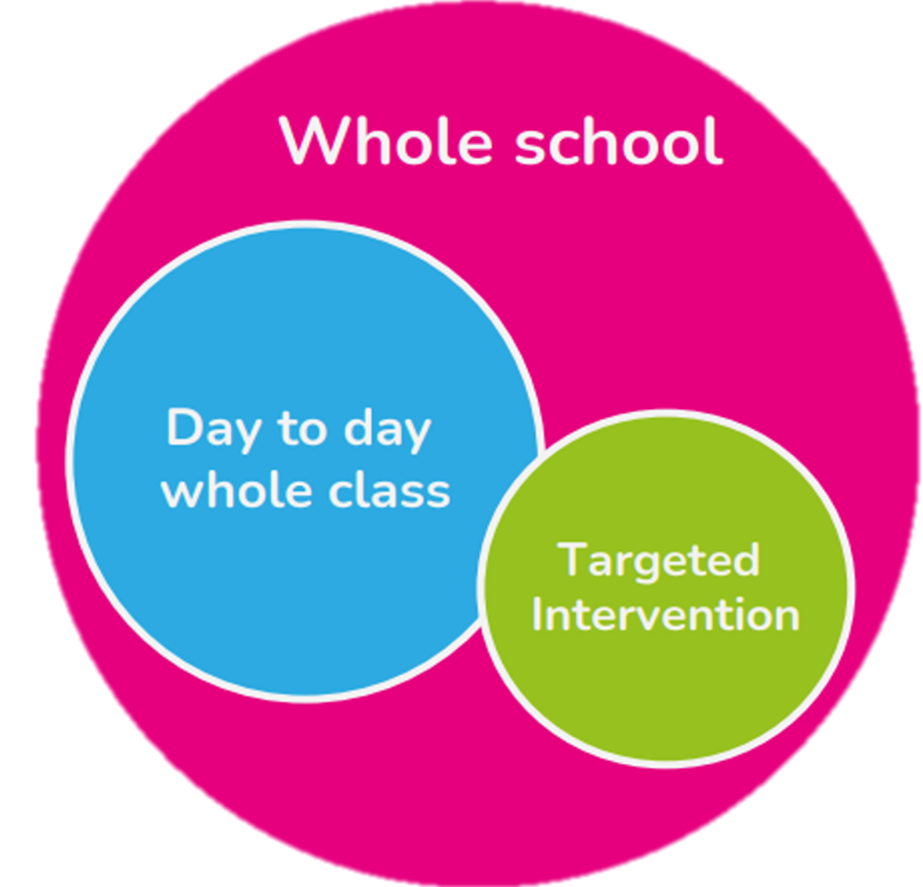
Whole school
Guided form-time reading, with regular staff training, QA, guest readers and sharing of best practice.
Systematic screening & early identification using national baseline data.
Staff CPD (phonics, fluency, comprehension, SEND) and follow-up QA to ensure staff implement effectively through disciplinary literacy.
Reading Age data sharing for all staff.
Reading-rich environment & strong library culture.
Family engagement & clear home reading guidance through regular parent communication (West Hill School app).
Day-to-day whole class
Model fluent reading (teacher-led reading).
All teachers supported to teach reading effectively and consistently.
Sharing of pupil reading data and providing evidence-informed strategies for pupils with reading needs.
Consistent approach to explicit vocabulary instruction (use of Frayer models) and oracy strategies.
Teachers scaffold comprehension using a consistent high-quality reading approach (such as the use of Reciprocal Reader strategies).
Frequent feedback & retrieval practice.
Targeted intervention
Small-group or 1:1 phonics catch-up (IDL, Lexonik) following early identification of literacy concerns.
Follow-up reading
Structured comprehension groups (e.g. Rapid Plus, Wikibuild, Paired Reading, small group reciprocal reading).
Precision teaching to support one or more components of reading with tight progress monitoring.
Assistive technology where appropriate (IDL).

To provide extra guidance for all our students, we have produced Reading Canons for each year group as well as recommended reading lists for each key stage, which are age-appropriate books that will be informative and stimulating.
Please see below our recommended reading lists for each key stage and our Reading Canons for each year group.

Assessments
To make sure we know the reading ability of all our students, we conduct regular testing using the NGRT platform. This provides us with a detailed breakdown of each student’s ability level as well as accurate insights into how to support students in the future. The reading test produces accurate reading ages, which we use to determine which students require additional support, as well as what type of intervention they would be best suited to.
Intervention
We evaluate the needs of our students very carefully. We have a range of intervention programmes to support all areas for development. For those with significant phonics gaps, we would use Lexonic. For students who are weaker with reading fluency, we would use Rapid Plus. For students who struggle with vocabulary and decoding skills, we would use our new WikiBuild programme. For students with other needs, such as dyslexia, they may benefit from our IDL programme. We feel that, whatever our students need in order to improve, we can provide it through our intervention.
Parental support
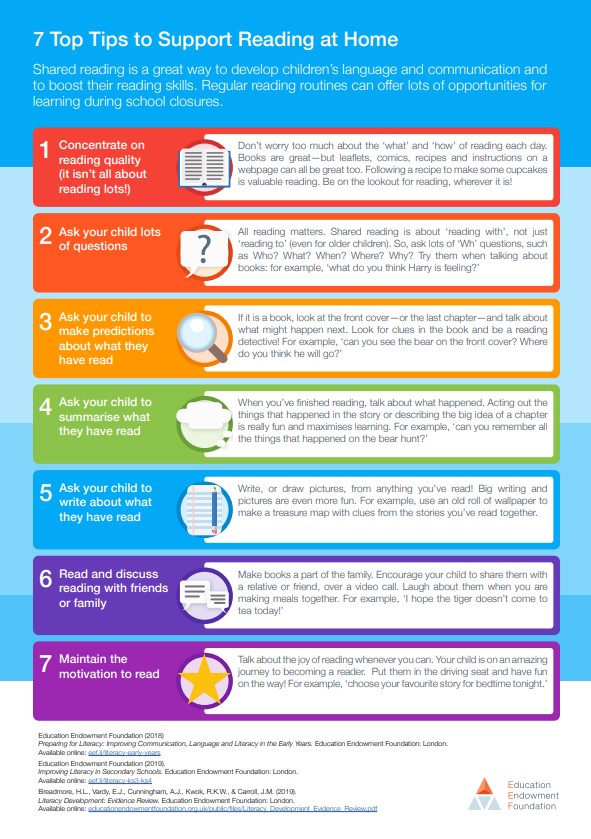
All parents or carers want to know how they can help at home. We use the West Hill School app to contact parents of students receiving intervention, as well as to notify all families of upcoming events, special occasions or new initiatives we are launching.